Endoscopic Bariatric Procedures

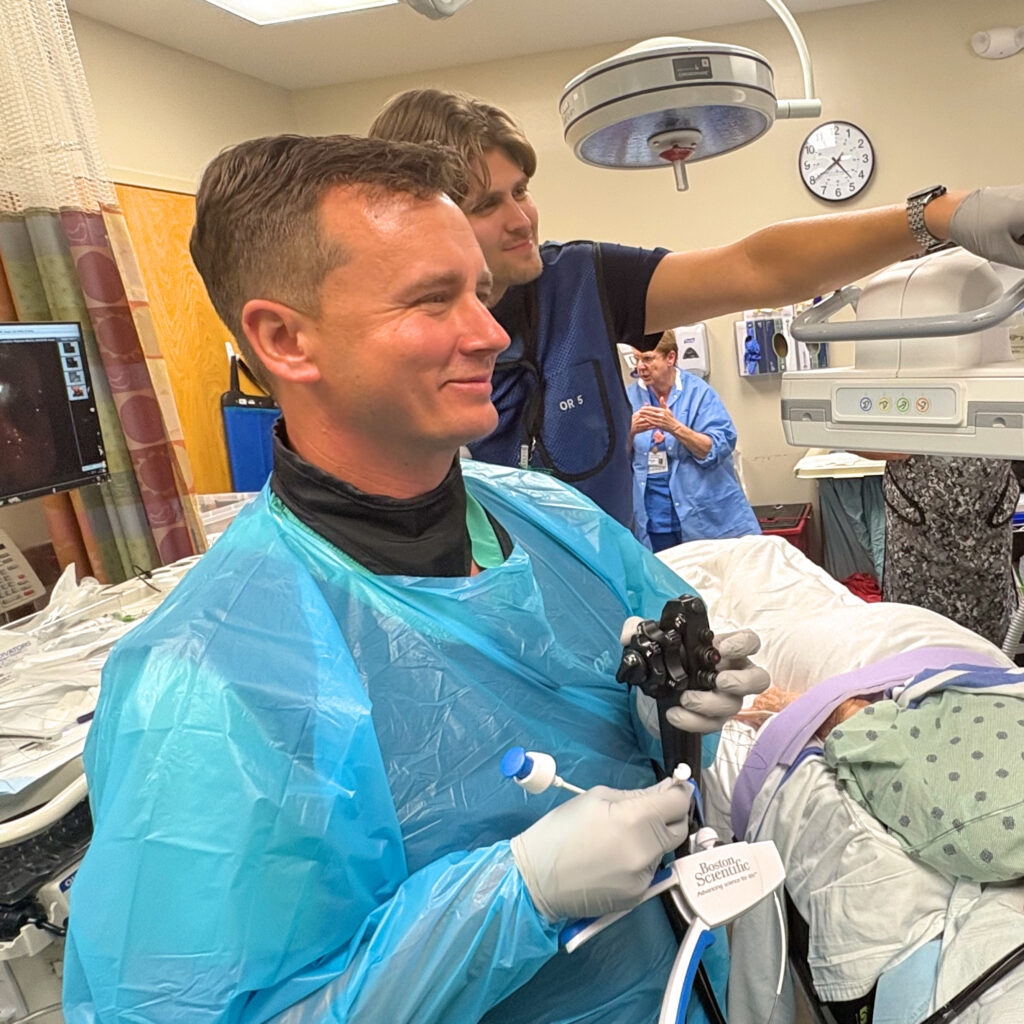
Dr. Justin Miller of Wilmington Gastroenterology Associates is currently the only provider in the region offering endoscopic bariatric procedures, in partnership with Columbus Regional Health Systems.

Endoscopic bariatric procedures are minimally invasive, incisionless weight loss treatments performed through the mouth using a flexible scope equipped with a camera and specialized instruments. Procedures include:

Endoscopic Sleeve Gastroplasty (ESG) – Endura Weight Loss Solutions

Also known as EndoSleeve, ESG is a minimally invasive endoscopic bariatric procedure designed to support gradual, lasting weight loss when combined with lifestyle changes. It is particularly helpful in patients with BMI 30-50, but can be offered in patients with higher BMI in select situations.

ESG reduces stomach size using sutures placed through the mouth during a simple outpatient procedure. It is performed under general anesthesia by a trained gastroenterologist or surgeon that uses the OverStitch NXT™ Endoscopic Suturing System to create 6-8 plications along the greater curve of the stomach.

Candidates for ESG are age 22 years or older and should have a BMI >(or equal) 35 or BMI >(or equal) 30 with a co-morbidity such as Type 2 diabetes, pulmonary hypertension, obstructive sleep apnea, cardiovascular disease, gastroesophageal reflux disease (GERD), fatty liver disease (MASLD) or hyperlipidemia.

Calculate your body mass index (BMI) to see if you are a candidate for ESG:

BMI calculator

Measurement units

For adults 20+. BMI is a screening measure, not a diagnosis or confirmation of procedure eligibility.

More information

Have you had prior bariatric surgery and regained weight?

Transoral Outlet Reduction (TORe)

A minimally invasive endoscopic revisional bariatric procedure, TORe is designed for patients who have regained weight after gastric bypass. By tightening the connection between the stomach and small intestine, TORe helps restore portion control and supports long-term weight loss.

TORe is performed under general anaesthesia by a trained gastroenterologist or surgeon, using the OverStitch NXT™ Endoscopic Suturing System. The procedure involves a flexible scope inserted through the mouth, avoiding incisions and minimising downtime. It safely restores the stomach’s restrictive function, similar to the original gastric bypass surgery, to help patients lose weight again, with most patients typically discharged the same day.

Candidates for TORe require evidence of weight gain after gastric bypass.

More information

Q&A for Endoscopic Bariatric Procedures
Studies have shown that you expect to lose at least 13.5% of your total body weight (TBW). Newer studies have shown that you can lose upwards to 20% of TBW and even higher with combination therapy.

Most patients will lose 8-10% of TBW achieving a total loss around the same amount after the original bypass surgery.

No, it will not. The sutures can be removed at any time and other surgeries such as Roux-en-Y bypass can still be performed.

Yes, at any time the sutures can be removed. Then the stomach will relax and expand as much as possible, depending on the time post-procedure.
Most side effects are minor including nausea, dehydration, and stomach cramping. We have developed a protocol to minimize these side effects using intravenous hydration and medications to decrease nausea. Severe adverse events occur in around 2%, which is less than surgery. These include bleeding and infection, however, they do not usually require reintervention. Supportive care with antibiotics and monitoring is usually all that is needed.

In some patients GLP-1 medication may be added to aid in additional weight loss achieving total body weight loss around 30%.

Some patients find it cumbersome to take medication daily or weekly. These medications can be expensive as well. A side effect of GLP-1 medication, especially starting and stopping frequently, is loss of lean body mass like muscle and bone. Last, recidivism of weight gain happens when a patient stops GLP-1 medication and even with time while on the medication. After 4 years of stopping medication greater than 75% of the lost weight will be regained.

Most private payers, Medicare, and Medicaid cover this procedure. New insurance codes came out in 2026 so insurance companies actually support these procedures. It is important to check with your insurance company to see if weight loss procedures/surgeries are covered under your individual plan.

Patients are discharged home after the procedure. Diet restriction is similar to that after surgical procedures. Because the stomach is restricted in size, solid food is restricted for a few weeks and reintroduced slowly. Most patients can go back to work the second day after the procedure. There are no other restrictions, including no weight lifting or driving restrictions the day after the procedure.

Age >(or equal) 22 years old

ESG candidates should have a BMI >(or equal) 35 or BMI >(or equal) 30 with a co-morbidity such as:

  • Type 2 diabetes
  • Pulmonary hypertension
  • Obstructive sleep apnea
  • Cardiovascular disease
  • Gastroesophageal reflux disease (GERD)
  • Fatty liver disease (MASLD)
  •  Hyperlipidemia

TORe requires evidence of weight gain after gastric bypass.

Insurance companies will cover the procedure if you have tried and failed traditional weight loss techniques like altering diet and physical activity or tried to lose weight with medication. A clinic visit is needed to document these efforts. Usually, after completing six months of weight loss efforts the procedure is covered.

Endoscopic Sleeve Gastroplasty (ESG)–Endosleeve–Endura Weight Loss Solutions

Call 910-362-1011 to schedule an appointment with Dr. Justin Miller or Rheanna Mcknight PA-C.